

Sleeping on Your Left Side May Affect Your Health in Surprising Ways — Here’s What the Science Actually Says
Everyone has a favorite sleeping position. Some people naturally sleep on their backs, others curl up on their stomachs, and many spend most of the night sleeping on one side.
But does it actually matter which side you sleep on?
Viral health posts often claim that sleeping on your left side can improve digestion, protect your heart, “detox” your body, prevent disease, and even dramatically improve circulation.
Some of those claims go far beyond the evidence.
However, sleep position can influence certain health conditions. Research provides particularly interesting evidence for nighttime acid reflux, while side sleeping in general can also matter for some people with sleep apnea and during later pregnancy.
Here’s what we actually know.
1. Left-Side Sleeping May Reduce Nighttime Acid Reflux
This is probably the strongest evidence-based reason to try sleeping on your left side.
Gastroesophageal reflux occurs when stomach contents move backward into the esophagus, potentially causing heartburn, a sour taste, coughing, or discomfort.
Body position can influence how easily this happens.
A 2023 systematic review and meta-analysis found that sleeping in the left lateral position was associated with less nighttime acid exposure and faster acid clearance compared with sleeping on the right side or back in people with gastroesophageal reflux disease (GERD).
In other words, if nighttime heartburn is keeping you awake, the left side may genuinely be worth trying.
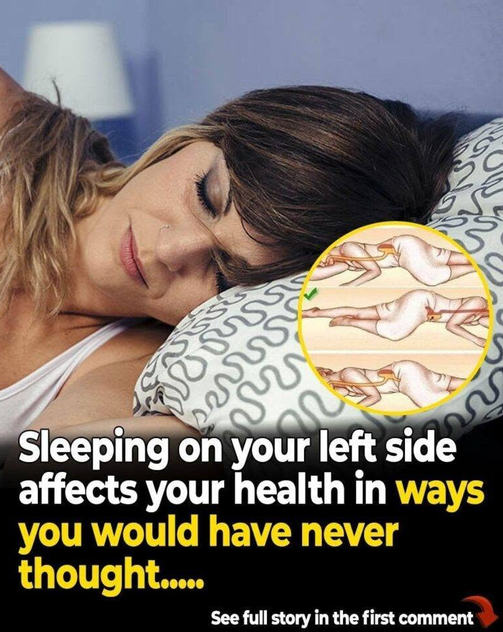
Why Might the Left Side Help With Heartburn?
The stomach isn’t positioned symmetrically inside the body.
Because of its anatomy and relationship with the esophagus, gravity and body position can influence the movement of stomach contents.
When someone with reflux lies on the right side, stomach contents may remain in a position that makes reflux more likely or slows the clearance of acid from the esophagus.
On the left side, the anatomy can work more favorably.
Older physiological studies and newer clinical research have repeatedly observed less acid exposure while people with GERD lie on their left side.
There’s Even Evidence From a Randomized Trial
This isn’t based solely on theory.
A randomized controlled trial involving 100 people with nighttime reflux tested a device that encouraged participants to avoid sleeping on their right side.
Treatment increased left-side sleeping and produced more reflux-free nights. Treatment success—defined as at least a 50% reduction in the study’s nighttime reflux score—occurred in 44% of the intervention group compared with 24% of the sham group.
A 2026 study using smartwatch-based positional therapy has also reported improved nighttime reflux symptoms when participants spent less time on their right side and more time on their left.
So among the many claims surrounding left-side sleeping, reflux relief has some of the clearest supporting evidence.
2. Side Sleeping May Help Some People With Sleep Apnea
Here’s where an important distinction is necessary.
Research doesn’t show that everyone with sleep apnea specifically needs to sleep on the left.
Instead, side sleeping in general can help some people with positional obstructive sleep apnea.
When you sleep flat on your back, gravity can contribute to tissues in the tongue and throat moving backward and narrowing the airway.
For people whose obstructive sleep apnea becomes worse when they’re on their backs, turning onto either side may reduce breathing interruptions.
But Side Sleeping Isn’t a Cure
If you snore heavily or experience pauses in breathing during sleep, don’t assume changing positions has solved the problem.
Untreated sleep apnea can have important health consequences.
Warning signs can include loud habitual snoring, witnessed breathing pauses, gasping or choking during sleep, morning headaches, and significant daytime sleepiness.
Proper assessment may involve a sleep study.
Positional therapy can be useful for selected people, but it shouldn’t automatically replace treatments such as CPAP when those have been medically recommended.
3. Side Sleeping Becomes Important During Later Pregnancy
Pregnancy is another situation where sleeping position deserves attention.
As pregnancy progresses, lying flat on the back can allow the enlarged uterus to compress major blood vessels.
The American College of Obstetricians and Gynecologists (ACOG) says sleeping on the side may be best during the second and third trimesters.
However, here’s an important correction to a very common internet myth:
Pregnant women don’t necessarily have to sleep exclusively on their left side.
ACOG specifically says that sleeping on either the right or left side is acceptable.
So there’s no need to panic if you wake up on your right side.
Simply return to a comfortable side-sleeping position.
4. Side Sleeping May Be More Comfortable for Some Backs
Many people find side sleeping comfortable for the spine, particularly when the legs and hips are properly supported.
A useful position is to sleep on your side with the knees slightly bent and a pillow between them.
The pillow can help keep the pelvis, hips, and spine in a more comfortable alignment.
During pregnancy, ACOG similarly recommends side sleeping with one or both knees bent and notes that pillows between the knees or underneath the belly may provide additional support.
But there’s no universal sleeping position that eliminates back pain.
For some people, side sleeping aggravates hip or shoulder problems.
Comfort and proper support matter.
5. Left-Side Sleeping Isn’t a Magical Heart Treatment
This is where viral claims become especially exaggerated.
You may encounter posts claiming:
“Sleeping on your left side takes pressure off your heart and prevents heart disease.”
That’s far too simplistic.
Your heart doesn’t become dangerously compressed simply because you sleep on the “wrong” side.
And sleeping on your left side hasn’t been shown to prevent heart attacks or cure cardiovascular disease.
People with certain heart conditions may actually feel their heartbeat more noticeably while lying on the left because the heart is positioned closer to the chest wall in that position.
The best sleeping position for someone with significant cardiovascular disease should therefore be based on comfort and medical circumstances rather than an internet rule.
Does Sleeping on the Left Side Improve Circulation?
Claims about “improving circulation” need context.
Body position certainly affects pressure and blood flow in different parts of the body. Pregnancy is a clear example.
But for a healthy nonpregnant adult, there isn’t strong evidence that everyone needs to sleep on their left side every night to maintain normal circulation.
Your cardiovascular system is designed to circulate blood while you’re lying in different positions.
If one side causes pain, numbness, breathing difficulty, dizziness, or other symptoms, that’s a reason to discuss the problem with a healthcare professional—not simply force yourself to remain on the left.
Does Left-Side Sleeping Detox Your Body?
This is one of the most popular claims online.
You may read that sleeping on the left side “drains toxins” from the brain, liver, or lymphatic system.
The evidence doesn’t support turning this into a health recommendation.
Your body already has sophisticated systems for processing and eliminating waste involving organs such as the liver and kidneys, along with the gastrointestinal, respiratory, and lymphatic systems.
Sleep itself is biologically important.
But there isn’t convincing clinical evidence that healthy adults must sleep specifically on their left side to “detox” their bodies.
If an article promises that one sleeping position will flush toxins from your organs overnight, be skeptical.
Does Sleeping on the Left Improve Digestion?
This claim is partly based on anatomy but is frequently exaggerated.
Sleeping position can clearly influence gastroesophageal reflux, which is why left-side sleeping may help people with nighttime heartburn.
That’s different from claiming that left-side sleeping dramatically improves every aspect of digestion.
There isn’t good evidence that everyone needs to sleep on the left to properly digest dinner.
Your digestive system continues functioning in different body positions.
What About Constipation?
You may also see claims that sleeping on your left side automatically cures constipation.
There’s insufficient evidence to recommend left-side sleeping as a stand-alone treatment for chronic constipation.
Constipation can be influenced by fiber intake, fluid intake, physical activity, medications, medical conditions, bowel habits, and other factors.
Persistent constipation deserves a more complete approach than changing which side of the bed you sleep on.
Is Sleeping on the Right Side Bad?
No.
This is another misconception worth correcting.
Right-side sleeping isn’t inherently unhealthy.
For many people, it’s perfectly comfortable.
The main exception discussed in research is nighttime GERD, where right-side sleeping has been associated with greater acid exposure and slower acid clearance than left-side sleeping.
If you don’t have reflux and sleeping on your right side is comfortable, there is generally no reason to fear that position based solely on viral health posts.
What About Sleeping on Your Back?
Back sleeping has advantages and disadvantages.
For some people, it provides comfortable spinal alignment.
But it can worsen snoring and obstructive sleep apnea because gravity can contribute to narrowing of the upper airway.
More than half of people with obstructive sleep apnea may experience worse symptoms when sleeping on their backs, according to the Sleep Foundation’s medically reviewed overview of positional sleep apnea.
Later in pregnancy, back sleeping is also generally discouraged because the uterus can compress a major blood vessel.
What About Sleeping on Your Stomach?
Stomach sleeping may reduce snoring in some people because it avoids the classic back-sleeping position.
But it can also force the neck to remain rotated for long periods and may be uncomfortable for the lower back.
Again, there’s no single perfect sleeping position for every person.
The goal is to find a position that allows you to breathe comfortably and wake without persistent pain.
Which Side Should You Sleep on for Heartburn?
If nighttime acid reflux is the issue, try the left side.
Evidence indicates that this position can reduce nighttime acid exposure and allow refluxed acid to clear from the esophagus more quickly than right-side or back sleeping.
Other strategies may also help.
Research reviews of nighttime reflux have supported approaches including left-side sleeping, elevating the head of the bed, and allowing more time between dinner and going to bed.
If reflux happens frequently despite lifestyle changes, talk to a healthcare professional.
How to Make Left-Side Sleeping More Comfortable
If you want to try sleeping on your left side but keep rolling onto your back, don’t force your body into an uncomfortable position.
Try a supportive pillow that keeps your neck aligned with your spine.
Place another pillow between your knees.
A body pillow can provide additional support in front of the torso.
Make sure your mattress doesn’t allow the shoulder and hip to sink excessively or create painful pressure points.
And don’t worry if you change positions during the night.
Humans naturally move while sleeping.
Side Sleeping Can Cause Shoulder or Hip Pain
Sleeping on one side all night places prolonged pressure on that shoulder and hip.
Some people therefore wake with numbness, stiffness, shoulder pain, or hip discomfort.
If that happens regularly, alternating sides, adjusting pillow height, using a pillow between the knees, or reassessing the mattress may help.
Persistent pain shouldn’t simply be accepted because someone online said the left side is “healthier.”
Sleep quality matters too.
Should Everyone Train Themselves to Sleep on the Left?
No.
If you’re healthy, sleeping comfortably, and don’t have a condition affected by body position, there’s no compelling reason to force yourself to sleep exclusively on your left side.
Left-side sleeping becomes particularly interesting when you’re dealing with nighttime acid reflux.
Side sleeping more broadly may be useful for some people with positional sleep apnea.
And side sleeping is commonly recommended during later pregnancy—although either side can be acceptable.
Beyond those circumstances, claims of extraordinary benefits should be treated cautiously.
Frequently Asked Questions
Is sleeping on your left side good for you?
It can be. The clearest evidence relates to nighttime acid reflux. Research suggests that left-side sleeping can reduce acid exposure and improve acid clearance in people with GERD.
Does sleeping on your left side help heartburn?
Yes, it may. Multiple studies have found that nighttime reflux tends to be less severe on the left side than on the right.
Is sleeping on your right side dangerous?
No. Right-side sleeping isn’t inherently dangerous. People with nighttime GERD may experience more reflux in that position, but that doesn’t make the right side unhealthy for everyone.
Which side should pregnant women sleep on?
ACOG says side sleeping is preferable later in pregnancy, but either the left or right side can be used. Pregnant women don’t have to spend the entire night exclusively on their left.
Does left-side sleeping prevent heart disease?
There’s no strong evidence that simply sleeping on the left side prevents heart disease or heart attacks.
Does sleeping on your left side detox your liver?
There isn’t convincing clinical evidence that left-side sleeping “detoxes” the liver. The liver already performs its normal metabolic and detoxification functions regardless of which side you sleep on.
Is side sleeping better for sleep apnea?
For many people with positional obstructive sleep apnea, sleeping on either side can reduce breathing disruptions compared with sleeping on the back.
Can left-side sleeping cure acid reflux?
No. It can reduce nighttime symptoms for some people but doesn’t eliminate the underlying causes of GERD.
Is sleeping on the left side good for back pain?
It can be comfortable for some people, especially with a pillow between the knees, but there isn’t one sleeping position that treats every type of back pain.
Final Thoughts
Sleeping on your left side isn’t the miraculous health treatment that some viral posts make it sound like.
It won’t automatically detox your organs, prevent heart attacks, cure digestive disease, or transform your circulation overnight.
But sleep position isn’t meaningless either.
The strongest evidence suggests that sleeping on the left side can reduce nighttime acid reflux in people with GERD.
Side sleeping in general may also reduce breathing disturbances for some people with positional obstructive sleep apnea, while sleeping on either side is commonly recommended later in pregnancy.
For everyone else, comfort and sleep quality remain extremely important.
So if you naturally love sleeping on your left side, there’s no need to change.
And if you’re comfortable on your right side, you don’t need to panic because of a viral Facebook post.
The “best” sleeping position ultimately depends on your body, your comfort, and any health conditions you may have.