

Those Faint Lines Running Up Your Fingernails: What They Can Mean and When to Pay Attention
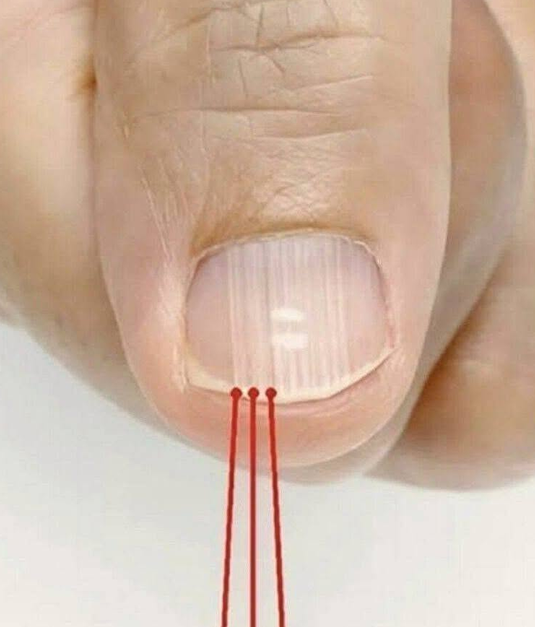
Have you ever looked closely at your fingernails and noticed faint vertical lines running from the cuticle toward the tip?
These lines are called longitudinal or vertical nail ridges, and in many people they are completely harmless. They often become more noticeable with age and don’t automatically mean you’re deficient in vitamins or suffering from a hidden disease.
However, nails can sometimes reflect changes in health. The important thing is knowing the difference between common vertical ridges and nail changes that deserve medical attention.
Here’s what those lines may actually be telling you.
First: Vertical Nail Ridges Are Extremely Common
Vertical ridges run in the same direction that your nail grows—from the base toward the tip.
The American Academy of Dermatology notes that lines running the length of a nail are common and are usually nothing to worry about.
They can become more obvious as people get older.
The NHS similarly explains that nails naturally change over time and may become thicker or more brittle with age.
So if you notice several fine, pale vertical ridges on otherwise normal-looking nails, there may be no underlying illness at all.
1. Aging Can Make Nail Ridges More Visible
Just as skin and hair change over the years, nails change too.
Nail growth can slow with age, and nails may become drier, thinner, thicker, or more brittle depending on the individual. Cleveland Clinic notes that brittle nails become more common as people age, partly because slower-growing nails experience longer exposure to water, dry air, soaps and sanitizers.
Fine vertical ridges can become increasingly visible at the same time.
This is usually a cosmetic change rather than a disease.
2. Dryness and Repeated Water Exposure Can Affect Your Nails
Think about what your hands experience every day:
Handwashing.
Dishwashing.
Cleaning products.
Hand sanitizer.
Cold or dry air.
Repeated wetting and drying can strip moisture from the nail and surrounding skin, contributing to brittleness, splitting and a rougher appearance.
The NHS recommends wearing protective gloves when hands are frequently exposed to water or cleaning products and regularly applying hand cream to the nails and fingertips.
If your nails are mildly ridged and dry, basic nail care may be more useful than searching for a mysterious disease.
3. Nail Trauma Can Change the Surface
Nails grow from specialized tissue near their base.
Repeated trauma to that area can affect how the nail grows.
Picking or pushing back cuticles aggressively, biting nails, repeated manicures or physical injury can create grooves, ridges or other irregularities.
The American Academy of Dermatology specifically notes that repeated picking or pushing back the cuticle can produce characteristic ridges in the center of the thumbnail.
Give the nail time to grow without repeated trauma and the appearance may gradually improve.
4. Brittle or Ridged Nails Can Occasionally Accompany Nutritional Problems
This is where many viral articles become misleading.
They often say:
“Vertical ridges mean you are deficient in iron.”
That’s too simplistic.
You cannot diagnose an iron or vitamin deficiency by looking at a fingernail photograph.
However, nutritional problems can sometimes affect nails.
Cleveland Clinic notes that fragile or brittle nails can occur with inadequate protein, iron or certain B vitamins, among other causes.
Iron-deficiency anemia is particularly associated with spoon-shaped nails, known medically as koilonychia, rather than ordinary fine vertical ridges alone. The NHS lists spoon-shaped nails among the less common manifestations of iron-deficiency anemia.
If nail changes occur alongside persistent fatigue, unusual weakness, shortness of breath, paleness, or other symptoms, a healthcare professional can determine whether blood testing is appropriate.
Don’t start taking high-dose iron supplements based solely on your nails.
5. Thyroid Problems Can Sometimes Affect Nails
Both overactive and underactive thyroid disorders can produce changes involving the skin, hair, and nails.
The NHS lists thyroid disorders among the long-term health conditions that can sometimes be associated with nail abnormalities.
But once again, nail ridges by themselves cannot diagnose thyroid disease.
If you have other unexplained symptoms—such as substantial changes in weight, heart rate, energy levels, temperature tolerance, bowel habits, skin or hair—discuss the complete picture with a healthcare professional.
Vertical Lines Are Different From Horizontal Grooves
This distinction is important.
Fine lines running up and down the nail are often common.
Deep grooves running across the nail from side to side are different.
These horizontal depressions are known as Beau’s lines.
The American Academy of Dermatology explains that deep grooves across a nail can develop when something temporarily slows or stops nail growth. Causes can include illness, fever, injury, chemotherapy, or significant stress.
The NHS similarly notes that deep horizontal grooves can occur after illness and may eventually grow out with the nail.
A single groove may represent a past interruption in nail growth.
Several nails developing prominent grooves at the same time may deserve medical evaluation.
What About White Spots on the Nails?
Another persistent myth says:
“White spots always mean calcium deficiency.”
That’s not a reliable rule.
Small white marks can occur after minor trauma to the nail, sometimes from an injury you don’t even remember.
Different patterns of white lines or discoloration can have different causes, however, so persistent or extensive changes deserve attention.
For example, Muehrcke lines are pairs or groups of horizontal white lines associated most commonly with low blood albumin from an underlying condition. Unlike some other nail lines, they don’t grow outward with the nail and disappear temporarily when pressure is applied.
That’s very different from an isolated tiny white spot.
What If the Nail Becomes Spoon-Shaped?
A spoon-shaped nail curves inward rather than maintaining its normal slightly convex shape.
This is called koilonychia.
It can sometimes be associated with iron-deficiency anemia.
If several nails become unusually thin and concave—especially alongside fatigue, paleness, breathlessness, headaches or noticeable heartbeats—it’s reasonable to discuss iron testing with a healthcare professional.
The nail shape alone still isn’t enough to establish the diagnosis.
What If Your Nails Develop Tiny Pits?
Small pinprick-like depressions across the nail surface are known as nail pitting.
This isn’t the same thing as ordinary vertical ridging.
Pitting can occur with skin or autoimmune conditions. The NHS notes that small dents or pits may be associated with conditions including psoriasis, eczema and alopecia.
Cleveland Clinic also reports that alopecia areata can cause pitting, brittleness, ridging and roughness of the nails.
If you develop widespread nail pitting, especially with a rash, joint symptoms or patchy hair loss, consider getting it evaluated.
What If Your Nails Become Thick and Yellow?
Yellow, thickened, crumbly nails often point toward a completely different issue.
Fungal infection is a common possibility, particularly in toenails.
The NHS lists fungal infection among the common causes of nail problems, while Cleveland Clinic notes that fungal nails can become yellow and thickened.
Not every yellow nail is fungal, though.
Nail polish, smoking and some medical conditions can also alter nail color.
Clubbed Nails Are Different From Nail Ridges
Clubbing is another nail change worth knowing.
The fingertips become enlarged or rounded while the nails increasingly curve downward over them.
This is not simply an exaggerated version of ordinary vertical ridging.
The NHS notes that clubbed nails can be associated with serious long-term conditions, while the American Academy of Dermatology recommends medical assessment for this type of nail change.
New clubbing deserves medical evaluation.
A New Dark Line Under One Nail Deserves Special Attention
Not all nail lines are raised ridges.
A new brown or black pigmented streak running vertically beneath a nail is a different finding and should not simply be dismissed as an age-related ridge.
There are benign causes of nail pigmentation, but melanoma can rarely develop under or around a fingernail or toenail.
The American Academy of Dermatology specifically identifies a dark line beneath a nail as one possible presentation of nail melanoma.
That does not mean every dark nail streak is cancer.
But a new or changing dark band—particularly one that widens, becomes irregular, changes color, or involves the surrounding skin—should be examined by a dermatologist or other qualified healthcare professional.
Can Kidney Disease Cause Nail Changes?
Certain systemic diseases, including kidney disease, can sometimes produce characteristic nail abnormalities.
But ordinary vertical ridges should not be promoted as a “hidden sign of kidney failure.”
Cleveland Clinic notes that kidney disease can be associated with several nail findings, but those changes overlap with other conditions and aren’t diagnostic by themselves.
Kidney disease is diagnosed through appropriate medical evaluation, including blood and urine testing—not by examining nail ridges on social media.
Can Diabetes Affect the Nails?
Diabetes can influence many parts of the body and may be associated with certain nail and skin problems.
The NHS includes diabetes among conditions that can sometimes produce nail abnormalities.
However, there is no reliable fingernail ridge pattern that allows someone to look at their hand and conclude:
“I have diabetes.”
Blood glucose testing is required to diagnose diabetes.
Should You Take Vitamins for Nail Ridges?
Not automatically.
This is another area where internet advice can cause problems.
Taking iron, zinc, biotin, or other supplements without evidence of a deficiency isn’t necessarily helpful, and excessive supplementation can sometimes cause harm or interfere with medical testing.
If a nutritional deficiency is suspected because of your diet, symptoms, medical history, or blood tests, a clinician can recommend appropriate treatment.
A faint vertical ridge alone isn’t a reason to start a collection of supplements.
How to Keep Your Nails Healthier
For ordinary dry, brittle or mildly ridged nails, basic care can make a noticeable difference.
Keep nails comfortably short and trim them regularly. Moisturize your hands, nails and cuticles, particularly after washing. Wear protective gloves when washing dishes or handling cleaning products. Avoid biting, picking or aggressively pushing back the cuticles. Don’t repeatedly scrape underneath nails with sharp objects.
These measures are consistent with the NHS’s recommendations for routine nail care.
And give improvements time.
Fingernails grow gradually, so damage doesn’t disappear overnight.
When Should You See a Doctor About Nail Changes?
Most fine vertical ridges aren’t a reason for an urgent appointment.
But medical evaluation becomes more appropriate when a nail change is new, unexplained, persistent, painful, or progressively worsening.
The NHS recommends seeing a healthcare professional when a nail changes shape or color or falls off without an obvious explanation, or when the surrounding skin becomes sore, red, swollen and warm.
Also seek evaluation for a new or changing dark streak, significant clubbing, severe pitting, spoon-shaped nails, unexplained deep horizontal grooves across several nails, or substantial nail separation.
Frequently Asked Questions
Are vertical ridges in fingernails normal?
Often, yes. Fine lines running from the cuticle toward the nail tip are common and usually aren’t a cause for concern.
Do nail ridges mean iron deficiency?
Not necessarily. Iron deficiency can affect nails, but ordinary vertical ridges alone cannot diagnose it. Spoon-shaped nails are a more recognized nail finding associated with iron-deficiency anemia.
Do fingernail ridges mean vitamin deficiency?
Sometimes nutritional problems affect nail quality, but many people with vertical ridges don’t have a vitamin deficiency. Blood tests and the rest of your symptoms are more informative than nail appearance alone.
Why are my nail ridges becoming more noticeable?
Age, dryness, repeated water exposure, trauma and individual nail characteristics can all contribute. Nail texture commonly changes with age.
Are horizontal nail lines more concerning?
Deep horizontal grooves, or Beau’s lines, can indicate that nail growth was temporarily disrupted by an illness, injury, chemotherapy, significant stress or another cause.
Do white spots mean calcium deficiency?
Not necessarily. Small white spots commonly have other explanations, including minor trauma. White nail patterns can differ significantly, so persistent or unusual changes should be assessed rather than automatically blamed on calcium.
Can stress affect your nails?
Yes. Significant physical or psychological stress can interfere with nail growth, and horizontal grooves may appear afterward.
Can nail changes indicate cancer?
Rarely, melanoma can occur under or around a nail. A new or changing dark brown or black streak deserves medical attention, particularly if it becomes wider or irregular.
Final Thoughts
Those faint vertical lines running up your fingernails are usually far less mysterious than viral posts suggest.
Fine vertical nail ridges are common and are often harmless, particularly as we get older.
Dryness, frequent exposure to water and cleaning products, minor trauma and normal aging can all affect nail texture.
At the same time, nails can sometimes provide clues that something else deserves investigation. Deep horizontal grooves, spoon-shaped nails, significant pitting, clubbing, unexplained color changes or a new dark streak underneath a nail shouldn’t simply be dismissed.
The most important rule is not to diagnose yourself from one photograph or one fingernail.
Look for new changes, progression, multiple affected nails and other symptoms.
Your nails can occasionally provide useful clues about your health—but they are only one small part of the picture.