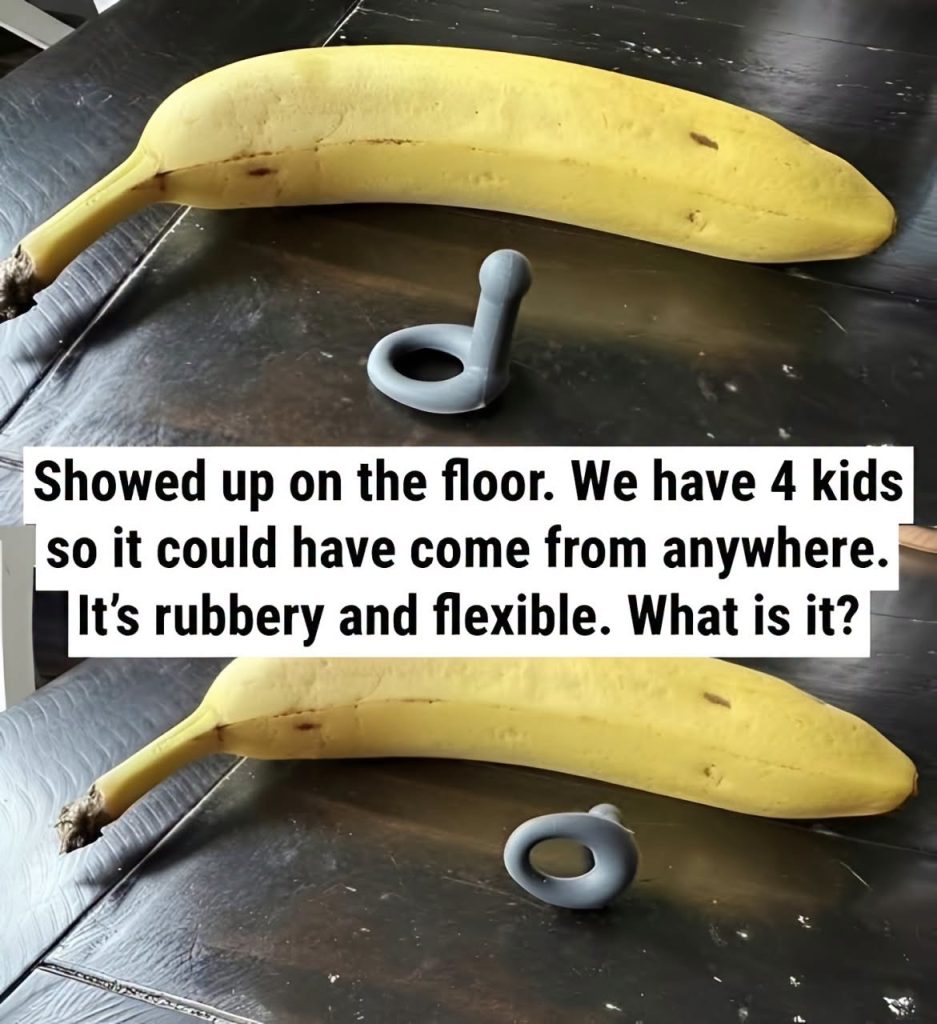
Small Parts and Choking Safety
A loose rubber or plastic connector may be a choking hazard for
babies and young children. Small objects should be picked up promptly
and stored out of reach.
If a child is coughing forcefully after placing an object in the
mouth, encourage continued coughing while closely supervising them. If
the child cannot breathe, cry, or speak, contact emergency services
immediately and provide age-appropriate choking first aid if you are
trained to do so.
If you believe a child swallowed a small object but is breathing
normally, contact a healthcare professional or poison-information
service for guidance. Some objects pass naturally, while others may
require medical assessment depending on their size, shape, and material.
A Guide to Other Common Floor Mysteries
Small Rubber Cap or Button
This may come from a folding kitchen tool, furniture leg, appliance rack, reusable bottle, lunchbox, or storage container.
Tiny Plastic Spring
This may be part of a retractable pen, toy mechanism, soap dispenser, or clicking device.
Small Metal Cylinder
This may belong to a cabinet hinge, mechanical pencil, zipper pull, eyeglass frame, or small appliance.
Clear Silicone Ring
This is often a sealing gasket from a bottle lid, food container, travel mug, blender, or kitchen appliance.
Colorful Plastic Fragment
This may be part of a building toy, puzzle, game piece, hair accessory, craft item, or broken household object.
Small Black Rubber Foot
This commonly comes from the bottom of a cutting board, electronic device, kitchen appliance, trivet, or piece of furniture.
How to Identify an Unknown Household Part
A simple process can help narrow down the possibilities:
- Note where the object was found.
- Examine its material, size, shape, and color.
- Look for wear marks, holes, threads, or adhesive residue.
- Check nearby drawers, toys, appliances, and furniture.
- Look for an object with a missing or exposed connection point.
- Take a clear photograph beside a coin or ruler for scale.
- Use image search or ask in a household-repair community.
Why Location Matters
The place where an object is found can provide useful clues, but it does not always reveal the full story.
A piece found in the kitchen may have come from a utensil, appliance,
food-storage container, or child’s toy carried into the room. Something
found beside the couch might have traveled there in clothing, a vacuum
cleaner, a pet’s mouth, or a child’s pocket.
Instead of checking only the immediate area, think about the paths
people, pets, laundry baskets, and toys regularly travel through the
home.
How to Prevent Small Parts from Going Missing
- Inspect folding and collapsible tools periodically.
- Avoid pulling connected utensils apart forcefully.
- Store small kitchen tools in a dedicated container.
- Replace worn clips, hinges, and seals when possible.
- Keep detachable parts away from toddlers.
- Check beneath furniture during routine cleaning.
- Use a small labeled container for unidentified pieces until their source is found.
Frequently Asked Questions
Why Do These Connectors Become Loose?
Repeated bending, pulling, washing, and exposure to heat can
gradually stretch flexible materials. Friction-fit connectors may also
loosen when the cups are pulled apart by the handles rather than
separated gently near the connecting point.
Should I Use Super Glue to Secure It?
Glue is not always the best solution. It may prevent the hinge from
moving, damage silicone, or create a surface that is difficult to clean.
Adhesives not designed for food-contact items should not be used where
they could touch ingredients.
If the connector no longer stays in place, replacing the measuring set is often safer and more reliable.
What If I Cannot Find the Original Object?
Place the part in a small container for a few days rather than
discarding it immediately. The missing source may become obvious the
next time you use a toy, appliance, or kitchen tool.
If nothing appears damaged or incomplete after a reasonable period,
the piece may have come from packaging or from an item that is no longer
in the home.
Could It Be Something Else?
Yes. Similar-looking rubber parts are used in many products, and
identification from appearance alone is not always certain. The
collapsible measuring-cup explanation is plausible when the size, shape,
and nearby household items match, but checking the actual set is the
best way to confirm it.
A Gentle Closing Thought
In a busy family home, the floor can become a temporary museum of
lost objects: puzzle pieces, toy wheels, pen springs, bottle seals,
clips, and fragments from tools that no one remembers using.
Finding a mysterious piece is not necessarily a sign that the home is
disorganized. It often reflects the ordinary movement, curiosity, and
activity of everyday life.
The strange rubber button was most likely not a dangerous device or
an unusual gadget. It was simply a small part that had become separated
from a useful kitchen tool.
The next time an unidentified object appears, examine it with
curiosity rather than frustration. Check nearby tools, think about its
shape and function, and enjoy the small satisfaction that comes from
solving an everyday household mystery.