
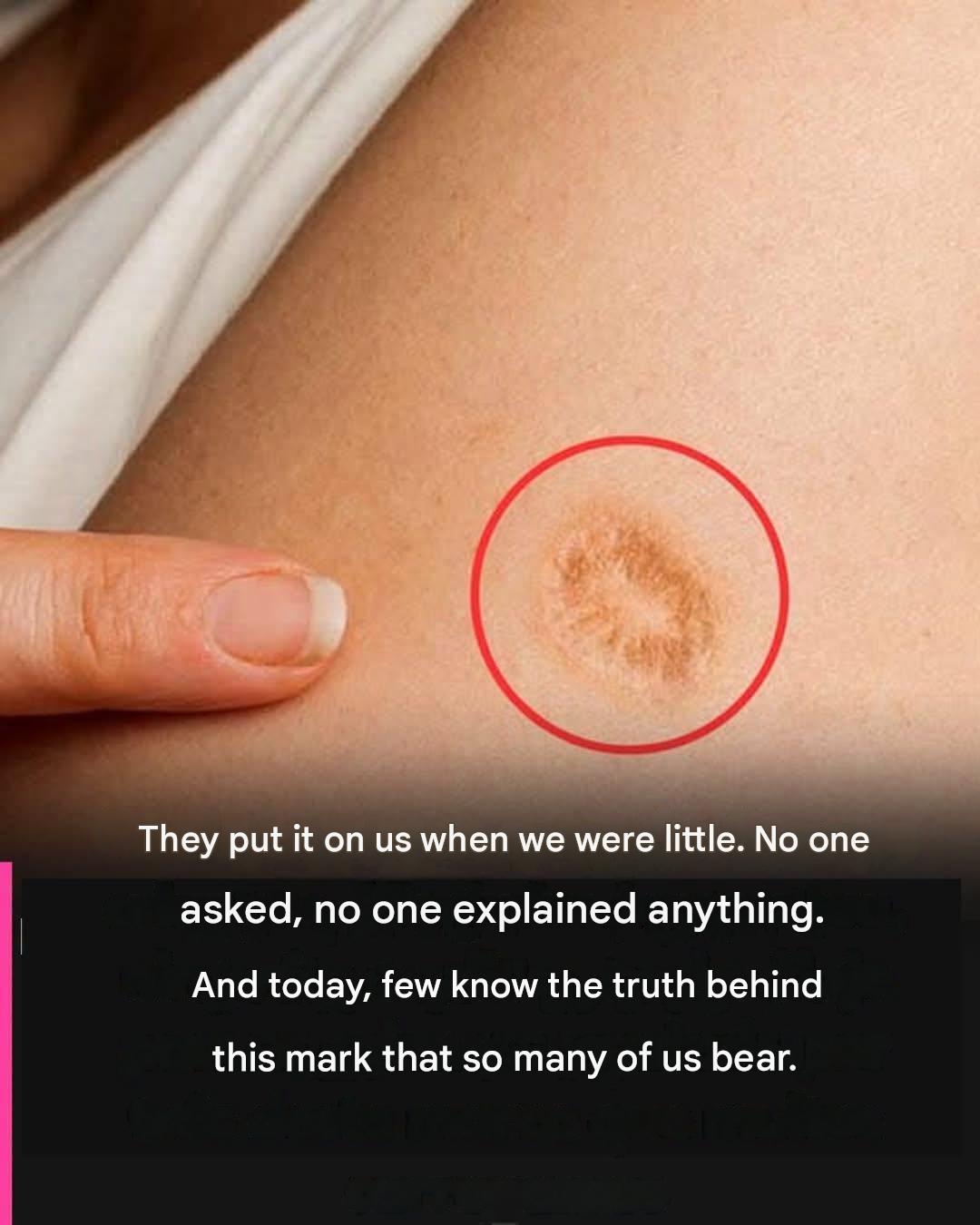
Have you ever noticed a small, round, slightly sunken scar on someone’s upper arm and wondered where it came from?
For many older adults, that unusual mark isn’t an injury or a birthmark.
It may be a reminder of one of the most important achievements in the history of medicine: smallpox vaccination.
Why Did the Smallpox Vaccine Leave a Scar?
The smallpox vaccine was administered differently from most vaccines people receive today.
Instead of using a conventional single injection, the vaccination technique involved a special bifurcated needle that made several small punctures in the skin.
Those repeated punctures produced a localized reaction. As the area healed, it could develop a crust and eventually leave behind a characteristic circular, slightly depressed scar.
That’s why the mark can look so different from the small scars left by many modern injections.
Why Is It Usually on the Upper Arm?
The vaccination was commonly administered on the upper arm.
For people vaccinated during mass smallpox vaccination campaigns, the resulting scar could remain visible for decades.
Over time, the mark became almost like a historical signature—something that could tell you that a person had received an older type of vaccine.
Smallpox Was Once a Major Threat
Today, it can be difficult to imagine how dangerous smallpox once was.
The disease caused enormous suffering and death around the world for centuries.
The development and widespread use of vaccination eventually transformed the situation.
In 1980, the World Health Organization officially declared smallpox eradicated, making it the first human disease to be eradicated through deliberate public-health efforts.
That makes the little scar on someone’s arm more than just an unusual physical mark.
For many people, it represents a moment in medical history.
Is It a Smallpox Scar or a BCG Scar?
This is where things can become confusing.
Another vaccine can also leave a noticeable scar: BCG, which is used to protect against tuberculosis.
The two scars can look somewhat similar, but they aren’t necessarily identical.
BCG scars are often raised or irregular, while the traditional smallpox vaccination scar is characteristically circular and depressed. The location can also provide a clue, although scar appearance alone isn’t enough to reliably identify which vaccine caused it.
If you’re trying to determine your own vaccination history, old medical records are much more reliable than judging the scar alone.
Why Don’t Modern Vaccines Usually Leave Marks Like This?
Vaccination techniques have changed considerably.
The smallpox vaccine’s delivery method involved multiple punctures that produced a visible skin reaction.
Many modern vaccines are administered using a standard injection into the muscle or tissue beneath the skin, which generally doesn’t produce the same characteristic scar.
So if you’ve ever wondered why your childhood vaccinations didn’t leave a similar circular mark, the difference is largely related to the vaccination technique.
Does the Scar Still Mean Anything Today?
The scar itself doesn’t mean that a person currently has smallpox or is infected with anything.
Smallpox was eradicated globally decades ago, and the virus no longer circulates naturally.
Instead, the mark is essentially a historical reminder of past vaccination.
It can also be a fascinating clue when older family members talk about the diseases and medical practices they experienced during childhood.
A Tiny Scar With a Remarkable Story
Something as small as a circular mark on an arm can tell a surprisingly big story.
It can remind us of a time when smallpox was a serious global threat, of the enormous vaccination campaigns that helped eliminate it, and of how dramatically medicine has changed.
So the next time you notice that distinctive round scar on an older person’s arm, don’t assume it’s just an old injury.
It may be a tiny reminder of one of humanity’s greatest public-health victories.