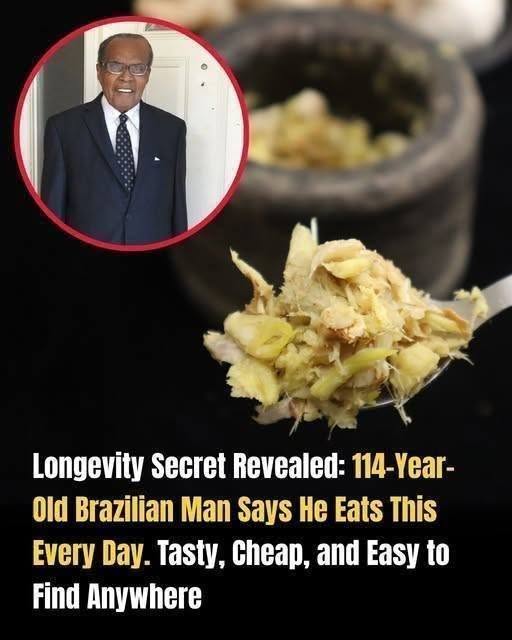
It can also be an easy way to add flavor to meals without relying heavily on sugar, salt, or highly processed sauces.
Oxidative stress is a natural process that occurs in the body and is influenced by many factors.
Ginger contains compounds with antioxidant activity, which is one
reason researchers continue to investigate its potential role in health.
However, eating ginger does not mean that aging can be stopped or
reversed. Healthy aging involves many interconnected factors rather than
one particular ingredient.
This is where the story of the 114-year-old man needs some perspective.
If someone reaches an exceptionally old age while eating a particular
food every day, it is tempting to assume that food is responsible.
But an individual’s experience cannot establish cause and effect.
People who live long and healthy lives often have many habits and
circumstances in common, including nutritious diets, regular physical
activity, social connections, adequate sleep, avoidance of tobacco, and
access to healthcare.
Ginger may be one small part of such a lifestyle—but it cannot be singled out as the reason someone reaches 100 or more.
You don’t need complicated recipes to enjoy ginger.
Try adding fresh or powdered ginger to:
- Herbal tea
- Soups
- Stir-fries
- Rice dishes
- Smoothies
- Homemade sauces
- Vegetable dishes
- Marinades
Fresh ginger can provide a stronger flavor, while powdered ginger is convenient for everyday cooking.
What About Ginger Supplements?
More is not necessarily better.
Concentrated ginger supplements can provide much larger amounts than
ordinary culinary use and may not be appropriate for everyone. Ginger
can also interact with certain medications or cause digestive side
effects in some people.
If you take regular medication or are considering high-dose ginger
supplements, it is sensible to discuss them with a healthcare
professional.
The Bigger Secret to Living Longer
The most important lesson from stories about exceptionally old people may not be a particular food at all.
Longevity is usually associated with a pattern of habits maintained over many years.
A balanced diet rich in vegetables, fruits, legumes, whole grains,
nuts, and other minimally processed foods is far more meaningful than
searching for a single “superfood.”
Regular movement, sufficient sleep, maintaining relationships,
avoiding smoking, managing stress, and staying mentally and socially
engaged can all contribute to healthy aging.
Ginger can easily fit into that picture—but it should be viewed as one ingredient, not a secret formula.
Final Takeaway
The story of a 114-year-old man who reportedly eats ginger every day
is certainly interesting, but it should not be interpreted as scientific
proof that ginger can extend human lifespan.
What we can say is that ginger is a flavorful food containing
biologically active plant compounds and has been studied for several
potential health effects.
So, if you enjoy ginger, there is no need to wait until you’re 114 to appreciate it.
Add a little to your tea, meals, or favorite recipes—and remember
that the real foundation of healthy aging is the collection of everyday
choices you make over many years.